Stories
Alumni Stories: Amaan
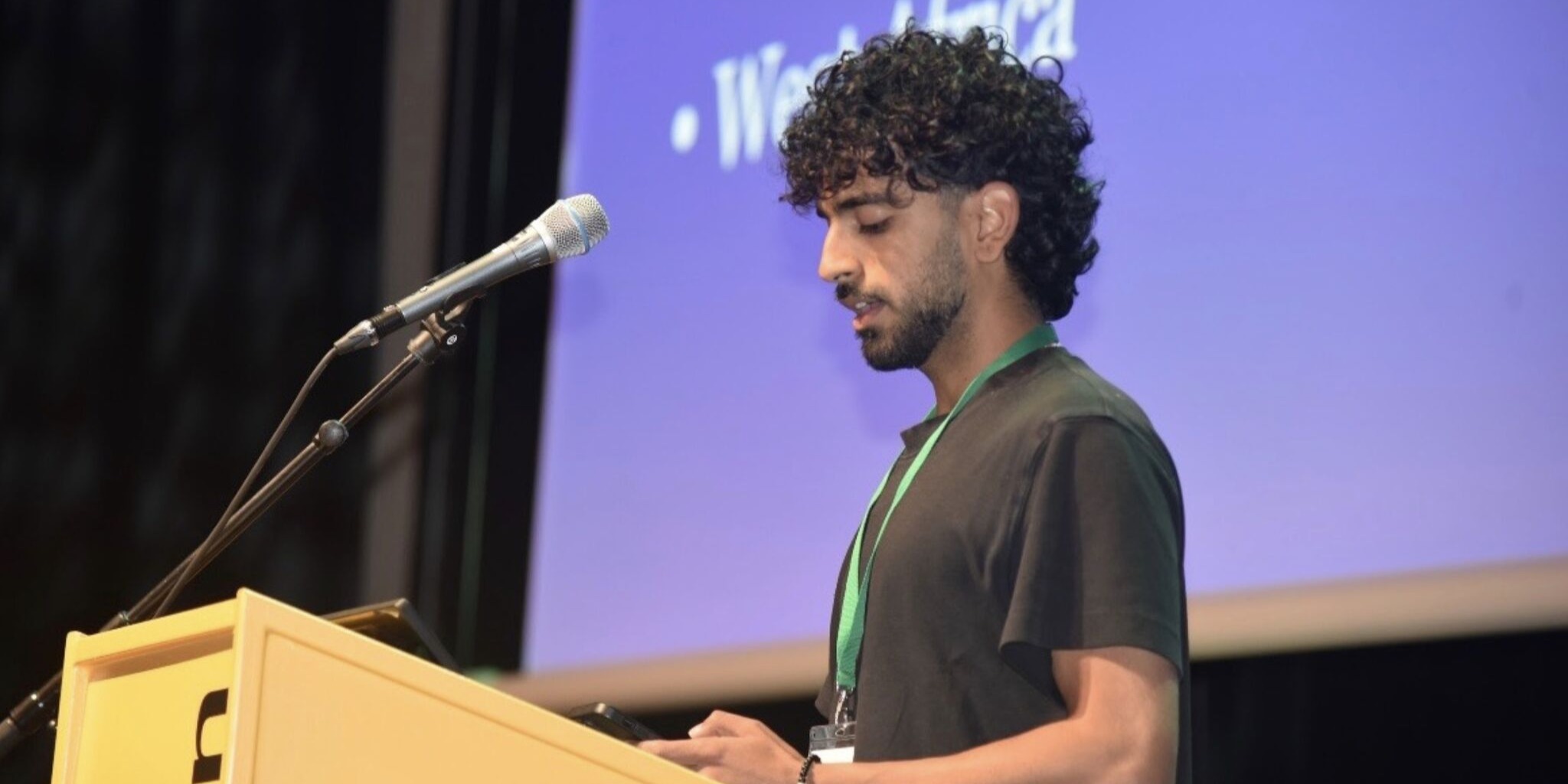
When Amaan Thawer (Class of 2021) enrolled in medical sciences at the University of Western Ontario, he thought his path was mapped out. Pre-med. MCAT prep. Medical school applications. It was a trajectory that made sense, until a single elective course in his first year changed everything.
“I went into university in the medical science program at Western and then I took a geology class out of curiosity,” Amaan recalls. “The course helped me realize that I loved that a lot more. So I just kept taking geology classes, and started learning about the Earth.”
Long before university course catalogues and career counselling sessions, Amaan’s fascination with the natural world took root in conversations with his grandfather in Pakistan. Those early exchanges would prove more influential than he could have imagined.
“Growing up, I became really interested in the natural world because my grandfather was a geologist back home in Pakistan, and he used to tell me a lot about science and space, and we used to talk a lot about paleontology,” he says. “That really drew me into learning about Earth System Science.”
As Amaan dove deeper into geology courses at Western, something unexpected happened: his passion for healthcare didn’t disappear—it evolved. “My old passion for healthcare also came back, because I realized how interconnected the Earth is to human health,” he explains.
“The intersection between the two really drew me to the field of planetary health, which is what I'm interested in now, and is the reason why I am applying to medical school.”
Planetary health. For most undergrads, it’s an unknown field. For Amaan, it became his calling.
After his second year at Western, Amaan travelled to India for an internship that would crystallize his understanding of the urgency of planetary health. Working on a mangrove restoration project, he and his research team visited villages to discuss environmental concerns with local communities. What he heard stopped him in his tracks.
“Whenever they were talking about the environment, they were also mentioning their health,” Amaan remembers. “They’d said there were more monsoons, more cyclones, and that’s affecting my agriculture, which is in turn affecting my family’s nutrition. That was the eureka moment for me. It made me realize there are so many health impacts that come from the earth’s systems.”
The connection was undeniable: environmental degradation wasn’t just an ecological issue, it was a public health crisis unfolding in real time. The planet’s fever was making people sick.
Energized by this revelation, Amaan began searching for ways to deepen his involvement in planetary health. That’s when he discovered the Planetary Health Alliance, an organization seeking campus ambassadors. He applied, was selected, and served as Western University’s campus ambassador for two years — a role that would open doors he never anticipated.
Recognition came swiftly. The Planetary Health Alliance appointed Amaan as Youth Director on their North American Board of council members, making him responsible for youth engagement across the continent. The organization then awarded him their 2025 travel scholarship to attend a planetary health conference in the Netherlands, where he connected with scientists and researchers from around the globe.
.png)
“Now as the new youth director, I help shape youth engagement,” Amaan says with evident enthusiasm. “There’s a lot of creative freedom, and I'm learning things like grant writing and moderating meetings. It’s exciting to work with passionate people who want to make a real impact.”
But perhaps the most transformative experience of Amaan’s undergraduate career came from an opportunity that landed in his inbox almost by chance.
In 2023, Amaan received an email from a professor about a field course in El Salvador. “All of these opportunities I’ve had stemmed from a random email from a prof who said, ‘This is my course. It's in El Salvador. It's about the environment,’” he recounts. “I thought it sounded cool, so I might as well apply. Then, boom, my whole life changed!”
The ten-day field course explored El Salvador’s unique history of environmental extractivism and the preservation of Civil War memory. Amaan was hooked. He stayed on to work in their lab for a year, contributing to research that mapped massacre sites and documented them through survivors’ firsthand accounts.
“The lab I worked in focused on mapping out certain areas where massacres took place and detailed them from firsthand perspectives of people that were actually in the massacres,” he explains. “This research allowed me to uncover the events of the war from beginning to end through the experiences of survivors. I felt like a detective, it was the coolest thing ever.”
The experience became central to his identity as a scholar. “I got a job from it and now applying to grad school, El Salvador is one of the main things I’m talking about in my applications. You know, it's crazy how much one experience can change the trajectory of your whole education.”
Today, as Amaan prepares for graduate school and continues his work as Youth Director with the Planetary Health Alliance, he reflects on the winding path that brought him here — from medical sciences to geology, from his grandfather’s stories to El Salvador's soil, from individual health to planetary wellness.
“You know, undergrad is about writing your own story, writing who you are, and finding out who you want to be,” he muses. “In my first year, I didn't know what planetary health was, but now I can’t imagine my life without it and now that's what I want my career to focus on.”
His advice to current students? Stay curious. Take that random elective. Apply for that field course. Answer that professor’s email. Sometimes the detours become the destination.
Because when the Earth’s health and human health converge — as Amaan learned in Indian villages and Salvadoran fields — that intersection isn’t just academically interesting. It’s where the future of medicine is being written, one geological layer, one restored mangrove, one preserved memory at a time.
.png)